During hot spring and summer days, after walking in the sun from early morning hours and taking 1000 pictures of churches, statues and lovely little streets, all we want is relax with delicious food and drink to get more energy for taking another 1000 pictures. During days like this, there is nothing better than eating some fresh fruit and vegetables. Juicy, cold, sweet – the real taste of summer!
Undoubtedly, super fresh fruit and vegetables in Warsaw can be bought daily in Mirowskie Halls – a historic food market in the heart of Polish capital.
Hala Mirowska – historic fresh food market in Warsaw, Poland.
Mirowskie Halls were built between 1899-1901. Formerly the baroque pavilions were barracks of the Crown’s Mounted Guards. Mirowskie Halls, except for the walls, were almost entirely destroyed during Warsaw Uprising (bullet holes are still visible on the northern wall of one hall) and then rebuild after World War II.
The west hall, called Hala Mirowska, since 1997 has been owned by the company called “Społem”. The east hall, called Hala Gwardi, for many years served as a sports centre.
Nowadays, it’s “a heaven on earth” filled with fresh foods. People from Warsaw say that it’s worth coming here even from the farthest parts of the city. It’s not just about the fruit and vegetables, but great atmosphere and surroundings. The beautiful architecture makes this market a perfect place to shop and edmire. Here you can find all kinds of vendors – elderly ladies with fresh eggs and homemade jams, exotic stands with purple potatoes and kids selling wild blueberries they picked with their grandmothers in the morning.
Unfortunately, it’s not possible to pay with credit cards and sometimes there are long lines, especially during the spring weekends, but despite that, the place is amazing. Make sure you find time to stop by during your stay in Warsaw.
Stary Kleparz – fresh food market in Krakow, Poland.
STARY KLEPARZ – KRAKOW
Adress: Rynek Kleparski
Kraków
Opening hours:
Monday-Friday: 7.00a.m. – 7.00p.m.
Saturday 7.00a.m.-3p.m.
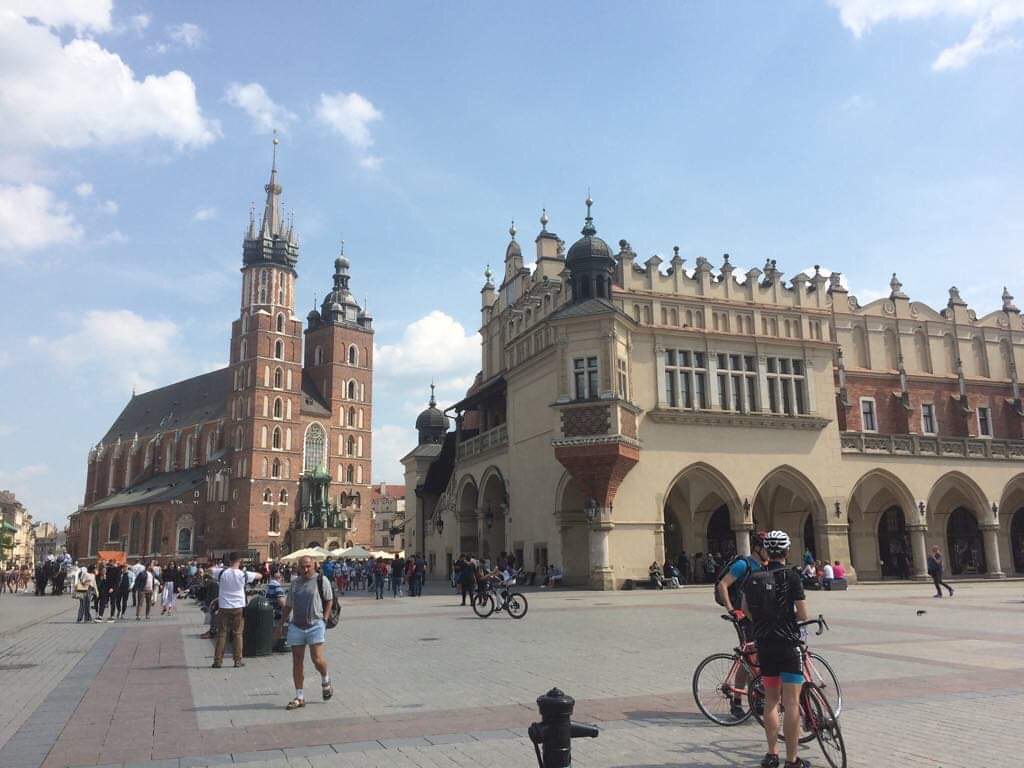
Do you know how to recognize real Cracovian? That’s the person that will always haggle over the price during shopping. That’s just the way things are here and there is no better place for that than Stary Kleparz and Hala Targowa. People have been shopping at Stary Kleparz since the 17th-century. Located in the center of the city, the place is always full of busy people – shouting sellers, gossiping ladies and shoppers exchanging recipes.
Sellers are nice, there are many choices of fresh products and the smell is seductive, guiding you through the entire market – from colorful stands with seasonal vegetables to the line for fresh milk and cottage cheese ( Polish cottage cheese is fabulous!). There is also a fish-stall with the best fresh fish in all of Cracow. It’s one of those places where shopping is a real pleasure. The best time for shopping is always in the morning before noon, later you might have problems with finding what you want. Many Cracow’s famous chefs shop here, too.
Another special place for fresh food shopping in Cracow is Hala Targowa. During the week you can find a lot of small shops with clothes, meat, bread and spices. On Sundays, it’s a flea market. You can find everything there – from household goods to shoes, silver watches, sweets to guitars and clothes. It’s a unique mix of trash and treasures. Of course haggling over the price is obligatory!
Kielbaski z Niebieskiej Nyski – Sausages from the Blue Minivan in Krakow, Poland.
But the most important part of Hala Targowa experience is trying Sausages from the Blue Minivan. That’s the only place in the world where you can get a grilled sausage, with fresh bread and orangeade from two gentlemen serving it from the Blue Minivan. “Kiełbaski z Niebieskiej Nyski” – as they are called, are for everyone. There is always a line from 8p.m. till 2a.m. There you can see students, tourists, hipsters, kids, and even nuns enjoying the sausages. It’s just a sausage, with fresh bread, mustard and an old Polish drink, but somehow it’s special.
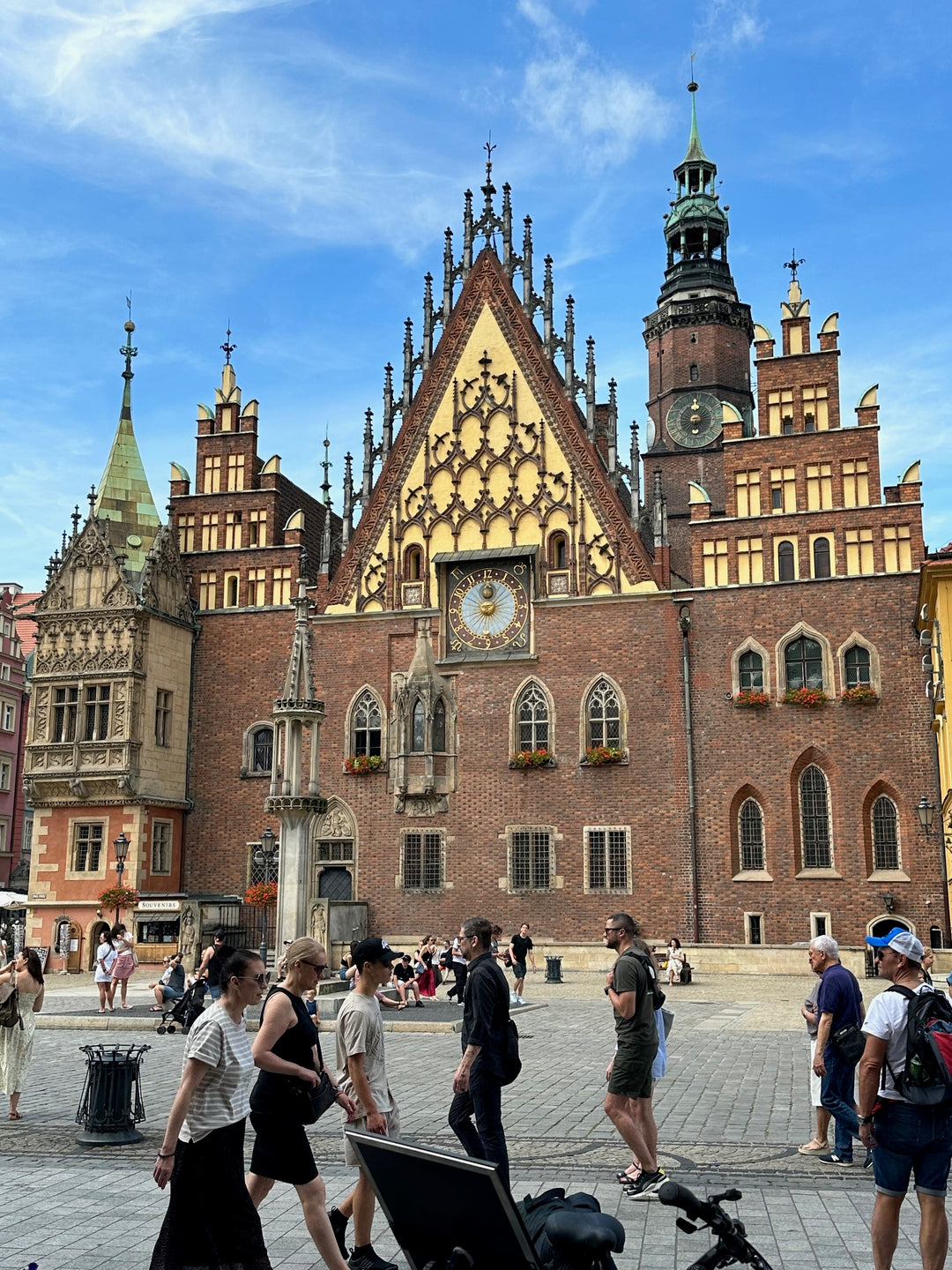
Hala Targowa – fresh food market in Wroclaw, Poland.
There is also something for fresh-food lovers in Wroclaw. Hala Targowa was build in 1908 and from that year on became a very popular place to buy fresh meat, fish, vegetables, sweets and flowers. There are also small shops with cosmetics, clothes, leather goods and jewerly on the upper floor. One can easily spend an entire morning browsing, tasting and experiencing this unique place. Make sure you bring your camera for an opportunity to take great pictures of fresh produce and people.
For a local shopping experience visit these fresh food markets on your next travels to Poland!
The city of Gdańsk is one of the most beautiful in Poland. Among its many delights are unique architecture, white sand beaches, the largest port, a power plant converted into a symphony hall, trendy night clubs, interesting summer festivals , UNESCO sites, museums, and gourmet cuisine served in stylish restaurants.
The Naptune Fountain on Dlugi Targ Street - Gdańsk, Poland
GDAŃSK HISTORY
Gdańsk is more than 1,000 years old and part of a larger area called Tricity, an urban complex extending along the Bay of Gdańsk including cities of Sopot and Gdynia. The Polish spirit is strong here. The Poles regained their independence in 1918, after a century and a half of occupation, and it took them less than 10 years to build one of the greatest ports on the Baltic Sea. Gdańsk is where the strikes of 1970, 1980 and 1988 brought down the communist system. In 1980, Lech Wałęsa led the strike at the Lenin Shipyard that started the Solidarity social movement. Walesa later became the president of Poland and won the Nobel Peace Prize.
AROUND THE CITY
The architecture and displays of cultural heritage in the Tricity area are impressive, in spite of wartime destruction. The Main Town in Gdańsk is a classic example of a Hanseatic (coastal trading) town. The narrow façades of picturesque Mannerist houses line streets that were once lively with traders from many countries. Several museums feature displays that illustrate northeastern Poland’s rich and colorful history. The National Museum houses a collection of old paintings and other crafts. The splendor of apartments once occupied by Gdańsk’s aristocrats is displayed in the Gdańsk History Museum. Exhibitions of maritime culture can be viewed at the Central Maritime Museum.
The Neptune Fountain is on Długi Targ Street, and behind it is the Artus Court, once the center of political life and merchant societies. Also nearby is the Gothic Main Town Hall, which houses a collection of Gdańsk carved furniture. Just off a narrow stone-paved street is Mariacka (St. Mary’s) Basilica, the largest brick Gothic church in Europe.
Delicious pan-fried flounder served with beer at Gdansk Brewery & Restaurant.
CULINARY DELIGHTS
Restaurants in Gdańsk feature every variety of cuisine — from seafood to meat-based to vegetarian. Here you can sample sophisticated meals based on traditions from the Middle East, Asia to original recipes from old Gdańsk cuisine and of course delicious Polish cuisine. The waters off the Polish Baltic Sea coast are rich in herring, cod, salmon, eel, turbot and flounder, so seafood specialties abound in the Tricity area. Beer that has become popular throughout Europe has been brewed in Gdańsk for centuries.
Famous Goldwasser liqueur from Gdansk.
Other local specialties include Goldwasser, a clear herb liqueur infused with gold flakes; Piołunówka, a modern version of absinthe; and Dzika Pszczoła (Wild Bee), a honey vodka made with forest herbs.
For an in-depth, off-the-beaten-path exploration of Gdańsk and Pomerania region join Poland Culinary Vacations on our “Coastal Cooking in Pomerania and Gdańsk” culinary and cultural vacation. We usually offer two trips to select from per year. Click here for day-by-day itinerary and vacation details. See you in beautiful Gdańsk, Poland!
Polish Easter traditions were born out of a combination of old Slavic customs, regional traditions and most importantly, the Feast of the Resurrection of Jesus Christ. There are many Easter customs, many of them connected with the cuisine. Let’s enter the fascinating world of Polish Easter traditions!
Pisanki – colorful wooden Easter eggs hand-made in Poland.
Celebration of the Holy Week begins on Palm Sunday. Palm branches symbolize victory and triumph. It was a common belief that a child carrying high palm will grow tall in the future and that during Easter, a man will eat much more than he eats on any other holiday. Even in the homes of peasants, Easter time was a period of a great feast. That’s not only because of joyful nature of Easter, but also because it follows the season of Lent – the period of prayer and fasting in preparation for Easter. There were only few dishes which were allowed to be eaten during the 40 days of Lent and many people refused to eat anything!
Two most popular Lenten foods have always been Żurek soup orŻur and herring. Żurek soup (zhooh-rek) – made from sour rye starter, similar to that used in sourdough bread and served with hard boiled egg and herring – prepared in different ways.
Żurek – sour rye soup. Eaten without the white sausage during Lent.
Herring salad.
Lent came to an end on Good Friday. Good Friday was a time of preparations, especially in the kitchen. Housewives and kids worked together to prepare foods for Easter.
The most important Easter foods have always been eggs. Easter eggs symbolize new life. Hard-boiled, beautifully decorated Easter eggs are called “pisanki” in Polish. Pisanki can be made by using different techniques: Kraszanka (or malowanka) - is made by boiling an egg in a concoction of plants or natural products. It could be gold (made from bark of young apple tree), black (oak), brown (onion peels), pink (beet juice), and many other colors. Drapanka – which is made by scratching the surface of an egg (especially kraszanka) with a knife or other sharp tool, to reveal the egg’s shell. Pisanka – created by drawing on an egg shell with melted wax; the egg is then submerged into a dye.
Only women could decorate Easter eggs and men were not even allowed to come inside the house during that process. It was widely believed, that man entering a house, when women were preparing “pisanki” would bring bad luck!
More of colorful hand-painted Easter eggs – pisanki. Source: Wikimedia Commons.
Pisanki are very important part of so called “Święconka”, which means the blessing of the Easter basket. Tradition of food blessing at Easter has very old medieval roots, and is still in widely practiced in Poland. A basket containing a sampling of Easter foods (including pisanki) is brought to church to be blessed on Holy Saturday. All baskets are very decorative. Foods inside have symbolic meanings, i.e.: eggs symbolize life and Christ resurrection, bread symbolizes Christ, salt – purification, ham – great joy and abundance.
After the blessing the food remains untouched until Easter Sunday morning.
Traditional “Święconka” – Easter basket. Source: Wikimedia Commons.
So what are the main courses for a Easter Sunday breakfast (and dinner later), and typical, traditional Polish dishes for Easter?
All kinds of meat; baked or fried and in the villages across Poland pig roasts are common, too. Baked ham, roast leg of lamb or loin of pork, roasted veal, beef, turkey, duck or chicken. Fresh, predominantly white sausage, and of course famous bigos, know as a Hunter’s Stew. It’s ingredients vary, but most often it includes sauerkraut, cuts of meat and sausages, tomatoes (whole or pureed), honey and mushrooms.
Another characteristic dish is braised red cabbage – sweet and sour braised. Boiled potatoes with caramelized onion and dill, famous pierogi (dumplings), horseradish, various cheeses and chalka – slightly sweet, egg braided raisin bread. You can eat chalka for breakfast or with a meal.
For desserts, a full range from cakes, which could take many fancy shapes like Easter lamb. The most popular cake is “Mazurek” (type of pastry), “Babka” a rich bread-like cake, often shaped to reminiscent a woman’s skirt, hence its name Babka (Grandmother Cake). Honey cake, makowiec – which is Polish specialty (poppy seed cake), sernik (cheesecake) and many other delicious desserts.
Delicious poppy seed roll and blueberry cake.
Easter holiday is not, of course, just about food. It’s about getting together with extended family and friends and enjoying leisure time. Monday after Easter is also a holiday in Poland and most shops are closed for business. Easter Monday or Wet Easter Monday is known as Smingus-Dyngus day in Poland and that’s when boys chase after girls with buckets full of water and try to drench them with it, all in good fun!
Poland is worth visiting at Easter time, both for great food as well as wonderful atmosphere!
If you love traditional Polish dishes, you’ll also love sophisticated modern Polish cuisine at the following trendy restaurants in major cities throughout Poland.
Warsaw is leading, with talented Polish chefs opening their own restaurants and bravely mixing old and new. Pay them a visit on your next trip to Poland and you’ll be in for a “tasty” surprise!
Warsaw – Warszawa:
Platter Restaurant
Chef Karol Okrasa (left) at Platter restaurant in Warsaw, Poland.
Platter Restaurant is led by chef Karol Okrasa. Here food is a form of an art. After all, art is all about arranging elements in a way that they stimulate our senses, beckon our eyes, provoke our thoughts, and tease our emotions. Chef Karol Okrasa creates flavours that evoke many things: warm memories of long-forgotten childhood tastes, a surprising sense of fun, and an invitation to take pure pleasure in food.
Karol Okrasa is one of Poland’s most celebrated and popular chefs. He hosted a few, very popular TV shows and wrote a book: “Cook with Okrasa”, which includes 105 of his own recipes.
As an expert in local cuisine, he promotes the use of Polish flavours in dishes, and offers distinctive combinations. He delights in combining familiar natural ingredients with unusual and forgotten ones, and in giving traditional Polish cuisine a modern flair.
His philosophy is: food in not only an occupation, it’s a lifestyle.
Tamka 43 restaurant is a magical place. It’s an authorial project of Pawel Kwiatkowski, a well known promoter, concert and event producer and Robert Trzópek, one of the most famous Polish chefs. Chef Trzopek gained his experience among others in the Copenhagen’s Noma and the Spanish elBulli restaurants. Menu at the restaurant changes regularly and is entirely based on the best, carefully selected and seasonal Polish and European ingredients. Surprising combination of flavors and sous vide cuisine make up for the unique character of this place.
Robert Sowa cooked for the Polish national soccer team, the luxurious Jan III Sobieski hotel in Warsaw and composed menus for LOT National Polish Airlines. Last year he decided to open his own restaurant. Sowa & Friends quickly became one of the most famous restaurants in Warsaw, certainly a must see or rather a “must taste”.
Robert Sowa loves seafood and is a big promoter of old, forgotten Polish recipes: simple, interesting and healthy.
How Sowa creates his excellent dishes?
“Provisions are formed in the head, on paper, in a pot, a pan, a plate. I can compare it to compose music. Composer hears sounds, I feel the taste. He creates a song, I mentally compose a dish, even though I’m not sure what it will be. He arranges the score, start to write down notes, I write down products. He sets his orchestra, I instruct cooks. He has the instruments, I ingredients. He begins to play, I cook. At the end his work is assessed in concert halls, my on a plate.”
Atelier Amaro Restaurant – Poland’s First Michelin-Starred Restaurant!
They do not work with the “la carte” concept, instead they offer prestigious menus in different formats, from three to eight delicious dishes, introducing supreme Polish flavor combinations. Atelier Amaro is also a member of Slow Food Poland Association. Last year, Atelier Amaro became the first restaurant in Poland rewarded by the prestigious Michelin Rising Star, appearing in the world’s best culinary guide and this March became the first restaurant in Poland to be awarded Michelin Star for culinary excellence! Atelier’s chef, Wojciech Modest Amaro, is the author of a bestselling book: “Polish Cuisine of 21st Century” and one of the most award–winning Polish chefs. He developed his skills with famous chefs, like Ferran Adria (Elbulli), Yanick Alleno (Le Meurice), and Rene Redzepi (Noma).
Chef Wojciech Amaro likes to show that being creative with traditional dishes can give magnificent results.
Arranged in the interior of the National Institute of Publishing (PIW) bookstore, Opasły Tom PIW shares tradition with an old café, that existed here in the 60s, visited by many Polish actors and writers.
Opasły Tom PIW is led by Agata Wojda, a very talented Polish chef. Menu in the restaurant is always short, sophisticated, and tasty! It includes dishes made from locally sourced, specially selected products. Juices are brought in from Maurerów, sheep cheese and other cheeses from the shepherd Wojtek Komperda, herbs from Maciejowice village and eggs only from the chicken barn and farm in Podlasie region, in eastern Poland. Opalsy Tom PIW is a place worth visiting if you’d like to experience the best of local cuisine!
Magda Gessler’s famous AleGoria restaurant is more than a restaurant. It is an invitation to meet Polish art and Polish cuisine – fine, intelligent, drawing on tradition, and at the same time served in a contemporary setting. AleGoria may be called an embassy of Polish art in a modern version. “The art in harmony with the universe, the art that might impress contemporary Europe” – Magda Gessler points out. It is a ‘Polish culinary fusion’. If you want borscht, it has got to be prepared with raspberry syrup and beets marinated in balsamic vinegar. Tomato soup requires dill and a fresh pickled cucumber. Faworki (deep-fried pastry ribbons)? Yes, but … made of carp on kogel mogel (egg yolk stirred with sugar). ‘Polish fusion’ is also expressed by the interior design. Kurpie paper cuttings decorating … a modern elevator. Stags antlers of …. wooden branches and doll beads. Easter palms at the entrance all year round. Traditional embroideries made by Polish highlanders (the so called “parzenica”) and lace tablecloths.
Magda Gessler is the most recognizable Polish chef. She hosted Polish version of “Kitchen Nightmares” and “Master Chef” TV shows. She’s not only a chef, but also a painter. Her restaurants have most astonishing and wonderful look among all Polish restaurants!
Herring appetizer from Ancora restaurant in Krakow, Poland.
Ancora Restaurant, lead by chef Adam Chrząstowski is a unique place. If you visit Ancora during winter season, you will encounter a special menu, to make a chilly weather a little warmer.
The chef and the co-founder of Ancora Restaurant Adam Chrząstowski is a philosopher by education, but he dedicated his career to flavours, aromas and wine at a young age.
He learned his cooking skills in Switzerland, Poland (prestigious Hotel Bristol restaurant led by Kurt Scheller) and… China. Adam worked for two years at two Shanghai restaurants. This experience enabled him to create his unique, signature cooking style, famed for unconventional fusion of flavours and aromas.
Menu changes often, according to season, or upcoming holidays.
After exploring Wawel Castle, and Krakow Market Square visit Ancora Restaurant for a delicious meal full of surprises!
Located in the city of Gdansk by the Baltic sea, Metamorfoza restaurant offers very interesting mix of Polish cuisine with plenty of seafood dishes.
At Mertamorfoza traditional Polish cuisine is combined with flavours from many other regions of the world; some ingredients undergo molecular change to enrich taste values. A vast majority of dishes are cooked sous vide, the products are fresh, not frozen, and come from regional suppliers, ecological farms, and fishermen – straight from their fishing boats.
“Restaurant only for connoisseurs of outstanding flavors.” The restaurant “Walczyk Flavors” welcomes guests interested in fine dining, sophisticated both in terms of menu selection, master cooking and serving the professional qualified personnel experienced in handling VIP guests.
Why the “Walczyk Flavors” is so special?
It’s friendly for business meetings and foreign tourists, offers discretion, care for the atmosphere and most importantly an outstanding menu. .
Simply put, “Walczyk Flavors” is worth experiencing for two good reasons:
First, the Chef – Jarek Walczyk, forever committed to offering top quality ingredients in all of his carefully prepared recipes.
Second, is “Thursday’s Live Cooking”. It’s very attractive form of spending time during business, family or friends meeting. All participants can take an active part in the preparation of dishes, which enriches the event. So, if you would like to try to cook with a master chef, visit “Walczyk Flavors”.
The capital of Lower Silesia offers many good restaurants, in which traditional Polish cuisine is mixed not only with modern flavors, but also with regional, Silesian dishes.
Good example of that is an Art Hotel restaurant, lead by chef Grzegorz Pomietlo. Located in a renaissance tenement, one the few so good preserved in Wroclaw, with authentic stone portals, and 18 century paintings, offers highly varied cuisine. If you want to try regional flavors of Lower Silesia, it will be a very good choice. The cuisine of Wroclaw is like it’s history; rich, fascinating, and still not completely discovered. It’s recipes were influenced with many other cultures.
Grzegorz Pomietlo is not afraid to present you with these flavors, and mix them with many modern recipes, creating tasty, unforgettable cuisine.
Pork knuckle served with horseradish sauce at JaDka restaurant.
JaDka Restaurant is located in a cozy Wrocław theatre nook, near old, medieval butcher shops. Under its Gothic vault you will find a rich variety of flavors. The appetizing aroma of sauces and pungent smell of spices emphasize the unrepeatable nature of Polish cuisine. All this is completed with a subtle nonetheless inspiring composition of salads.
At JaDka you can experience the taste of cold yogurt-and-beetroot soup, Zurek – sour rye soup eaten with potatoes, white sausage, hard-boiled egg and sometimes served in a bread bowl, golden chicken consommé with noodles, double fried lard mixed with onion, marjoram, apples or prunes – often spread over bread and served together with pickles as an appetizer before the main meal, steak tartar: raw minced beef with chopped onion and raw yolk, beef sirloin with mushroom sauce, Polish sausages, spare pork ribs in honey, roasted or grilled lamb, Bigos – seasoned “Hunter’s Stew” made from sauerkraut with chunks of various meats and sausages, Jewish carp in aspic with raisins, pierogi – very traditional small white dumplings, larger than ravioli, filled with sauerkraut and mushrooms, cheese and potatoes or with fruit or meat, pastry twisters, cheesecake, cake with apples and many, many more delicious desserts.
If you’re heading to Krakow, Warsaw , Wroclawand/or Gdansk, Poland this summer and fall, plan to attend culinary and cultural festivals in those four cities and surrounding areas. Celebrate with great regional cuisine and immerse yourself in local culture. What a treat!
JUNE – AUGUST 2013
KRAKOW
Regional Food Contest in Lopuszna – Taste hundreds of delicious highlander-style home-made recipes – 14 July, 2013 in Lopuszna, Lesser Poland region
Oscypek and All Cheeses Festival- A celebration of all cheeses - 11 August, 2013 in Zakopane, Lesser Poland region
XI Pierogi Festival- Polish stuffed dumplings festival – 15 – 18 August, 2013 – location: Maly Rynek square in Krakow, Lesser Poland region
XLVI Sabalowe Bajania- Annual festival of the local folklore - 8 – 11 August, 2013 in Bukowina Tatrzanska, Lesser Poland region
45th International Highland Folklore Festival- Highlanders from all over the world descend on Zakopane – 23 – 30 August, 2013 – Zakopane, Lesser Poland region
Malopolska Taste Festival– Grand Finale – 23 - 25 August, 2013 – location: Plac Wolnica, Kazimierz district, Krakow in Lesser Poland region
VIII International Wine Days – 17 – 18 August, 2013 – location: Jaslo, Lesser Poland region
Krakow Honey Harvest – XIX Bee-Keepers Festival – 28 – 29 August, 2013 – Plac Wolnica, Kazimierz district, Krakow in Lesser Poland region
WARSAW
XVII Biesiada Weselna – Celebrating Polish Wedding Traditions - 17 - 18 May, 2013 - Wegrow, Mazovia region
IX International Folk Festival “Warsfolk” – Folk ensambles from all over the world perform in Warsaw - 24 - 25 August, 2013, Warsaw, Poland
XXXVI Kurpie Bee-Keepers Festival – Honey, regional food and bread festival - 25 August, 2013 – Myszyniec, Mazovia region
WROCLAW
XIX Ceramics Festival in Boleslawiec- Boleslawiec Polish Pottery festival – 21 – 25 August, 2013 – Boleslawiec, Lower Silesia region
X Lower Silesia Soup Festival – 18 August, 2013 – Jedlina Zdroj, Lower Silesia region
VI Polish National Trout Festival - Best regional trout dish competition and more – 21 July, 2013 – Polanica Zdroj, Lower Silesia region
XII Flour Fest – Breads and sweets on display – 25 August, 2013 – Botanical Garden in Wroclaw, Lower Silesia region
Polish-Czech Harvest Festival- 25 August 2013 – Lawica village, Klodzko Commune in Lower Silesia region.
GDANSK
Fishermen Sea Pilgrimage by Boats - 30 June, 2013 in Puck, Pomerania region of Poland.
Kashubian Strawberry Harvest - 30 June, 2013 in Zlota Gora near Kartuzy, Pomerania region of Poland.
TheCod Fish Harvest – Polish Seafood Recipes Championship – 13 – 14 July, 2013 in Gniewno, Pomerania region of Poland.
Wdzydze Fair – 14 July, 2013 in Wdzydze, Pomerania region of Poland.
Kashubian Fair& Regional Cuisine – 20 – 21 July, 2013 – in Kartuzy, Pomerania region of Poland.
St. Dominik’s Fair & Bread Festival - 27 July – 17 August, 2013 in Gdansk, Pomerania region of Poland.
Polish Championships in Tobacco Snuffing – 28 July, 2013 in Chmielno, Pomerania region of Poland.
Pomerania Fair & Regional Cuisine – July/August, 2013 – in Bytow, Bytow Castle, Pomerania region of Poland.
International Folklore Festival – July/August, 2013 – in different Kashubian towns, Pomerania region of Poland.
Kashubian Flavors/ Malënowi Bęks – End of strawberry harvest – July/August, 2013 – in Wygoda Laczynska, Pomerania region of Poland.
Magic Malbork and Medieval Fair – 10 August, 2013 in Malbork, Pomerania region of Poland.
Days with Music and Bread – every Saturday and Sunday in July and August – in Kluki at the Slavic Village Museum, Pomerania region of Poland.
Folk dancers at the annual Polish Pottery Festival in Boleslawiec, Lower Silesia region of Poland.
SEPTEMBER 2013
KRAKOW
XII Bean Day Celebration – 7 – 8 September, 2013 – Zakliczyn, Lesser Poland region
Charsznica Cabbage Days Celebrations – 14 September, 2013 – in Charsznica, Lesser Poland region
Potato Day Celebration – 21 September, 2013 – in Bogucin Duzy, Lesser Poland region
WARSAW
Mazovian Bread Festival – Annual best Mazovian breads and harvest festival - 15 September, 2013 – in Wegrow, Mazovia region
V Ecology Fair in Ostroleka – 22 September, 2013 - in Ostroleka, Mazovia region
WROCLAW
Jelenia Gora Fair– 31 August - 1 September, 2013 – in Jelenia Gora, Lower Silesia region
XII International Bee-Keepers Fair– 31 August & 1 September, 2013 – in Jelenia Gora, Lower Silesia region
Potato Day Celebration- 14 September, 2013 – in Pstrazna, Lower Silesia region
Wine Day Celebration in the Treasure City- 7 - 8 September, 2013 – in Sroda Slaska, Lower Silesia region
GDANSK
Regional Contest for Best Pomeranian Fruit Cordial - 1 September, 2013 in Swolowo, Pomerania region of Poland.
Forest People Mushroom Holiday - 14 September, 2013 in Bory Tucholskie, Osieczna, Pomerania region of Poland.
Cysterian Fair - 15 September, 2013 in Pelplin, Pomerania region of Poland.
Kashubian Singers Convention – 15 September, 2013 in Zukowo, Pomerania region of Poland.
Potato Harvest – 15 September, 2013 in Wdzydze Kiszewskie, Pomerania region of Poland.
Every year, in late August, in the small town of Boleslawiec, located in the Lower Silesia region of Poland, about 120 km west of Wroclaw, Polish Pottery Festival transforms this town into an outstanding place of joy with live shows and beautiful crafts. Everything to celebrate the most famous ceramics from Bolesławiec, and perhaps all of Lower Silesia – Polish Pottery!
Hand made pottery from Boleslawiec (source: wikimedia commons).
Hand made pottery from Boleslawiec is completely different from the pottery you will find in Italy or France. The tradition of making pottery in the region of Boleslawiec goes back hundreds of years. Today, white clay is chosen carefully and baked in high temperature kilns. As a result, you get unique pottery, which is flame proof, can be used in a microwaves, and looks great in your dining room. Pottery from Boleslawiec is also ecologicaly safe, because lead free enamel is used for decoration. Most patterns are detailed, geometrical and floral designs. Each piece is completely different than another, all are hand made, unique, worthy to be collector’s item.
Various sizes of pottery on display during Polish Pottery Festival in Boleslawiec, Poland.
This popular summer festival in Poland, offers unforgettable and entertaining events: parades, shows, culinary presentations, and performances. Ceramic goods are presented at the marketplace for sale, and the streets are full of booths, where you can buy regional products, sculptures, and so on.
Large baking dishes are often sold for little money (and you can always bargain!). You will be surprised that in Boleslawiec you can purchase pottery using US dollars! This is because pottery from Boleslawiec is very popular among US military personnel from Germany. So when you will visit the Polish Pottery Festival you will meet surprisingly many Americans. Communication with vendors is also not a problem – most of them speak English very well.
There are a lot of activities during pottery festival even in the night (source: Boleslawiec Culture Center).
You can also visit pottery museum, and pottery factories (where you can paint your own piece of pottery during a hands-on workshop), as well as many historical landmarks in Boleslawiec, for instance beautiful town hall.
Town Hall in Boleslawiec (source: wikimedia commons).
Folk dance group during pottery festival (source: Boleslawiec Culture Center).
Folk dancers at the Polish Pottery Festival in Boleslawiec, Poland.
Polish Pottery Festival in Boleslawiec, Poland is a really unique, wonderful experience! You should definitely consider visiting this part of Lower Silesia with Poland Culinary Vacations. Our August 18 – 24, 2013“Flavors of Lower Silesia and Wroclaw” culinary vacation in Poland is scheduled around the XIX Polish Pottery Festival. Click here for all the details and start planning your 2013 Poland vacation today!
Christmas time is the most magical period of the year in Poland. The omnipresent atmosphere of kindness and happiness created by the presence of both locals and foreign visitors celebrating together is contagious.
The best thing about Christmas in Poland appears to be the combination of Polish traditions and customs together with the hospitality of the local people. Everyone seems to be more friendly, helpful and sociable than at any other time of the year. One can feel this unusual aura, at the main market squares in largest Polish cities like: Warsaw, Kraków, Wrocław, Gdańsk, Olsztyn, Toruń etc.
Christmas market in Wrocław, Lower Silesia region of Poland
Evening at the Christmas market in Krakow, in the Lesser Poland region
Christmas markets are the best places to meet with friends and relatives and have a cup of mulled wine or mead. It must be remembered that Christmas markets, which are set up every year a month before Christmas Eve, are a part of Polish tradition.
That’s why you should definitely consider visiting Poland during that time! Christmas markets offer unforgettable artistic and culinary events. At the markets you can purchase beautiful Christmas decorations such as: hand-made glass Christmas tree ornaments, tinsels and Christmas lights. You can also become a happy owner of a real Christmas tree. The joyful atmosphere at the markets is additionally created by the sound of Christmas carols, played in both Polish and English. However, the main attraction of each and every Christmas market in Poland remains nativity scene. The one in Krakow presents hand-made figures of the Holy Family and some replicas of Krakow’s famous monuments.
People listening to Christmas carols at the Christmas market in Wroclaw
Foreign visitors feel tempted to come to Christmas markets where they can learn about Polish traditions, get original presents, and try some home-made treats and products originating from various regions of Poland, e.g. meads, roasted chestnuts, gingerbread or oscypek - smoked sheep cheese made by highlanders from Podhale region.
Christmas ornaments for sale at the Wroclaw Christmas market
Gingerbread hearts for sale at the Wroclaw Christmas market
“It’s amazing to be here – said Graeme from Ireland. It’s my first time in Cracow (Krakow) and I’m impressed! I wasn’t sure about coming to Poland at winter time because my Polish friends told me that winters here are very cold and severe. But now I realize that the decision I have made was totally right! I’ve just bought some Christmas decorations for my parents and I’m sure that they’ll love it!”
Holiday display at the Main Market Square in Wroclaw
Here are dates for 2012 Christmas Markets – Jarmarki Bozonarodzeniowein various major cities across Poland:
Are you starting to think about gifts for your family and friends this holiday season? Are there some people on your list who have everything? Then consider THE GIFT OF EXPERIENCE!
What better way to honor the people in your life than by helping create lasting memories or perhaps even fulfilling a lifelong dream?
Poland Culinary Vacations guests posing with chef Andrzej Polan while on “A Three-Day Culinary Adventure Around Warsaw”
Book Your 2013 Poland Culinary Vacation EARLY and SAVE!
Are you planning to travel to Poland next year? The time is NOW to book and SAVE! We have launched our 2013 trip dates. A total of nine, exciting, week-long Poland Culinary Vacations to choose from to various regions of Poland.
Select one of our week-long vacations by December 15, 2012 and SAVE 10%!* After December 15, 2012 SAVE 5%! Hurry and pick your date today!
Contact us by email at: info@polandculinary.com
or call Toll Free 888-703-8130 if you have any questions.
*Discount applies only to non-commissioned bookings.
Are you looking for great tasting, high-quality food products to bring back from Poland? One of the nice things about buying Polish food gifts is that they’re always appreciated! In Poland, there’s a vast range of branded food products of high quality. You can find them in Polish culinary stores, which are located not only in Warsaw but also in other major Polish cities. These shops sell food such as sweets, liquors or famous Polish sausages. All products are sold in traditional, beautiful wrappings, which makes them even more attractive.
Poland Culinary Vacations guests visiting – E. Wedel Staroświecki Sklep in Warsaw, Poland
The most famous brand is Poland’s largest and oldest confectionery company E.Wedel. The company has gained recognition not only in Poland, but also abroad. There are many varieties of chocolates produced by E. Wedel but its best brands are: Ptasie Mleczko, Torcik Wedlowski or Mieszanka Wedlowska. Although Wedel products are sold in every supermarket in Poland, the company has its own unique, chocolate shops and lounges.In Warsaw it is Staroświecki Sklep often visited by tourists. But, the lounges can be found throughout Poland in shopping malls and market squares. The tradition of Polish lounges is quite old but today they are real chocolate-lovers attractions. While there, you may taste delicious chocolate desserts, drinks made with white, milk or dark chocolate. To find out more about the lounges visit Wedel’s lounges website.
Mieszanka Wedlowska- Wedel’s popular candies
In Krakow (Cracow), you can find a place for lovers of real chocolate - Lwowska Manufaktura Czekolady (Manufacture of chocolate), located on Szweska street. It’s a place where chocolate is not only sold, but it’s also made right in front of you, step-by-step!
Manufacture of chocolate
Variety of chocolate
You can watch how to make delicious chocolate in different shapes like: shoes, animals, cars, monuments and even furniture from chocolate.
Chocolate motorbike for your husband
Chocolate room
Chocolate shoe for your wife or chocolate motorbike for your husband – it can be really original and sweet souvenir!
To taste more traditional Polish products, you must visit a very elegant and popular culinary store, Krakowski Kredens (Kraków Pantry). This high quality brand sells traditional Polish food. Krakowski Kredens products are wrapped elegantly, and can be found in main Polish cities. The range of products varies from sausages and honeys to sweets and liquors. If you need some souvenirs you can either choose from delicious, elegant foods or you may also buy beautiful porcelain.
Krakowski Kredens-Kraków Pantry- some of the store’s products.
Since Poland is famous for its tasty, high-quality cold-cuts and sausages you should try terrine of hare or loin of pork in Skarby Smaku, another Polish culinary store. Unfortunately, the stores are located only in Warsaw. However, there’s a possibility to order all Skarby Smaku products online.
All kinds of quality preserves, candies, syrups are also available at Produkty Benedyktynskie, Benedicite. The stores purchase not only foods but also hand-made craft products or cosmetics made of natural ingredients. The items are beautifully wrapped and may be sold as great gifts. Benedicite’s main store is located in Kraków but there are three other locations in Warsaw.
Produkty Benedyktynskie – Benedicite’s products
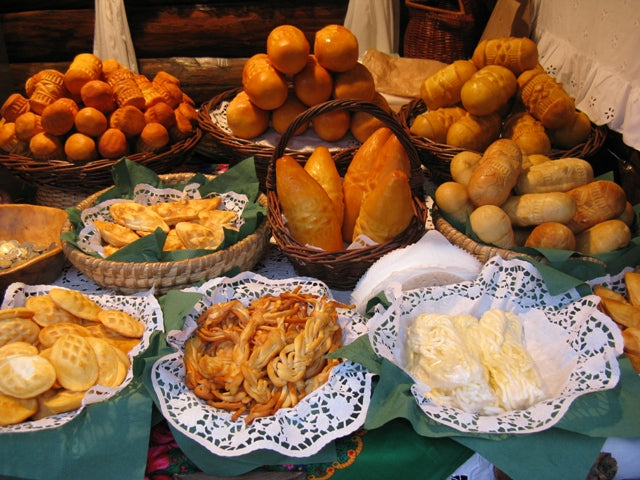
In Poland, you can also find nice gifts for cheese-lovers. For example, a traditional smoked sheep cheese called Oscypek, you can buy in Zakopane (in the mountains in the south of Poland).
Oscypek – traditional cheese from Zakopane
Oscypek is smoked-dried, so you don’t have to be afraid of your journey. You can easily bring it home for your family and friends. Oscypek has a little bit salty and original taste. You should try it!
Maybe would you like to buy some Polish vodkas, meads or wines? For example, Żubrówka - Bison grass vodka - makes a nice gift. It can be served in shot glasses or as a cocktail drink mixed with apple juice. You can find Żubrówka in every supermarket, grocery store and liquor store around Poland.
Żubrówka – traditional Polish vodka
Your family and friends will love Made in Poland, delicious food souvenirs! Make them happy!
We’ve met amazing people on ourcooking vacationsin Poland and they’ve shared with us some wonderful memories and thoughts inspired by their Poland Culinary Vacations. Here are some of our favorites:
“Thank you for an amazing experience! Once in a lifetime” - Adrienne C., Nashville, TN
“This trip far exceeded my expectations of Poland. Thank you for all your hard work!” - Stefanie B., Omaha, NE
“Thank you for a wonderful cooking experience. You are a positive force for your beautiful Polish country.” – Tracy, H., Collegeville, PA
“I had the best time thanks to you. Enjoyed every minute. Thank you.” – Charlene B., Blair, NE
“Thank you for re-acquainting me with my heritage! Your culinary tour this September was particularly meaningful to me and your detailed planning made it wonderful to be there and experience the food, the country and the people.Everyone associated with the tour was knowledgeable, friendly, and great traveling company. You thought of everything!I had a wonderful time. Look for me, and additional members of my family, to be booking another tour.” – Joanne H., Myrtle Beach, SC
“Poland Culinary Vacations presented a fabulous culinary program, an excellent tour of Malopolska (Lesser Poland) and an overall fun time. I rate this culinary vacation a definite 10.” – Christine B.,Atkinson, NH
“What an amazing experience, to walk in the country of your ancestors, meet the people and feast on the food you love! Poland Culinary Vacations far exceeded my expectations in their care, knowledge and love of “foodies”! Each guided day brought a new adventure, breaking bread with local village ladies sharing their knowledge of cooking with us, visiting historical sites, rafting and the biggest flea-clothing-shopping market anyone has ever experienced. Carefully selected restaurants highlighting local cuisine ended our evenings. Each succulent mouthful was wonderful! Top this all off, by staying in a Palace with a spa in Zakopane, was just out of this world. Would I recommend Poland Culinary Vacations…Absolutely! Would I vacation again with them…Absolutely! Would I go back to Poland…Absolutely!” - Cathy M., Barrie, ON, Canada
“Krakow, Zakopane and the surrounding areas are such beautiful and interesting places to see and get to know and don’t think that I will ever tire of visiting the Lesser Poland region. What really made this holiday such a memorable one was the cooking sessions with village ladies from the villages in the Podhale area. Allowing us to see them prepare never ending array of dishes, explaining about ingredients and various ways of preparation (inevitably each of them had their own method) was just a start. Their hospitality I could easily say was unmatched with homemade cakes and “digestives”, as they described their hand finished liqueurs and wines they welcomed us with, followed by all the dishes we were shown how to make during the course of the morning. The inevitable singing and joking would ensue and by the time we were leaving we were the best of friends. The whole experience would be very hard to match and definitely never to be forgotten.” – Maria F., Caversfield, United Kingdom
“We’d like to thank Sarna Rose, our fabulous host, for the great Culinary Vacation. It exceeded all expectations. The small group made it possible to be very flexible, especially with such an accommodating driver and wonderful guide. We were privileged to cook in a restaurant, a community center, the Culinary Institute in Krakow and in a private home where the local village ladies patiently shared their knowledge of cooking and culture with us. Moments to treasure! We relished the marvelous cuisine in a variety of restaurants and the sightseeing tours were incredibly interesting and varied. We would recommend it to any age of either sex.” – Ed & Terri H., Victoria, B.C., Canada
“I can’t speak highly enough about my tour to Krakow and Zakopane with Poland Culinary Vacations. It was one of the best trips I’ve ever taken! Malgorzata ‘Sarna’ Rose runs a first-class operation. I am not a fan of large tour groups so this tour with its small number of participants and its flexibility really appealed to me. Our time was divided between cooking, sightseeing and, of course, lots of good eating. Because I’m of Polish descent the tour took me back to my “roots”. The hotels and restaurants chosen for us were excellent. My fondest memories are of the cooking sessions with village women in their kitchens. They were so welcoming and eager to share their recipes with us. After enjoying the lunch we had prepared together we were treated to singing by the women.” – Nancy J., Springfield, VA
“Want to say it has been a wonderful trip! I especially enjoyed the countryside, towns and shopping was good, too.” – Kris A., Great Falls, MT
“If I had to pick a highlight I couldn’t, I’d pick three. The three mornings we spent cooking with the country housewives were great. From the food to the nalewki it was great. There was plenty of wonderful food – especially borscht and croquettes. But, the highlight was being in those kitchens, working as a group, then sitting down to a great lunch you had a hand in making. If you’re lucky there will be singing – and you will probably be lucky.” - Jim B., Minneapolis, MN
“I recently spent a wonderful week in Lower Silesia, Poland, participating in a culinary tour. Our accommodations were great staying part of the time in a 16th century castle! How often can you say that, lol. It was a beautiful place to stay in the countryside of Poland. We spent part of our time in the country visiting some of the villages and participating in the hands on cooking with the village ladies. These wonderful women cooked and sang for us sharing their cooking knowledge. We made pierogi, golabki, and red beetroot borscht among the many dishes they shared with us. Our week was busy with touring as well as cooking. We got to experience the Polish culture and history of the area. We ate in fine restaurants, eating the tasty Polish cuisine. Being third generation Polish I found it a very emotional trip. My Grandmother had grown up near the area I was touring and I felt a part of the country. My thanks goes out to all who accommodated us, especially Sarna, the President of the Poland Culinary Vacations, Inc.” - Barbara M., Great Falls, MT